SiteLine Field Directory
On a large construction project, finding the right person can require knowing several different things: a name fragment, company, role, trade, assigned area, or safety responsibility. I originated and pitched SiteLine, gathered requirements, demonstrated prototypes, and built it as the sole developer. The mobile-first field directory makes those fragments useful.
The functional MVP is a Power Apps canvas application backed by a project-scoped Microsoft List. It is now used in the field, primarily by safety personnel and people completing QA/QC reports. It combines fast directory search, practical contact actions, project context, and a focused Safety experience without presenting historical work information as live location.
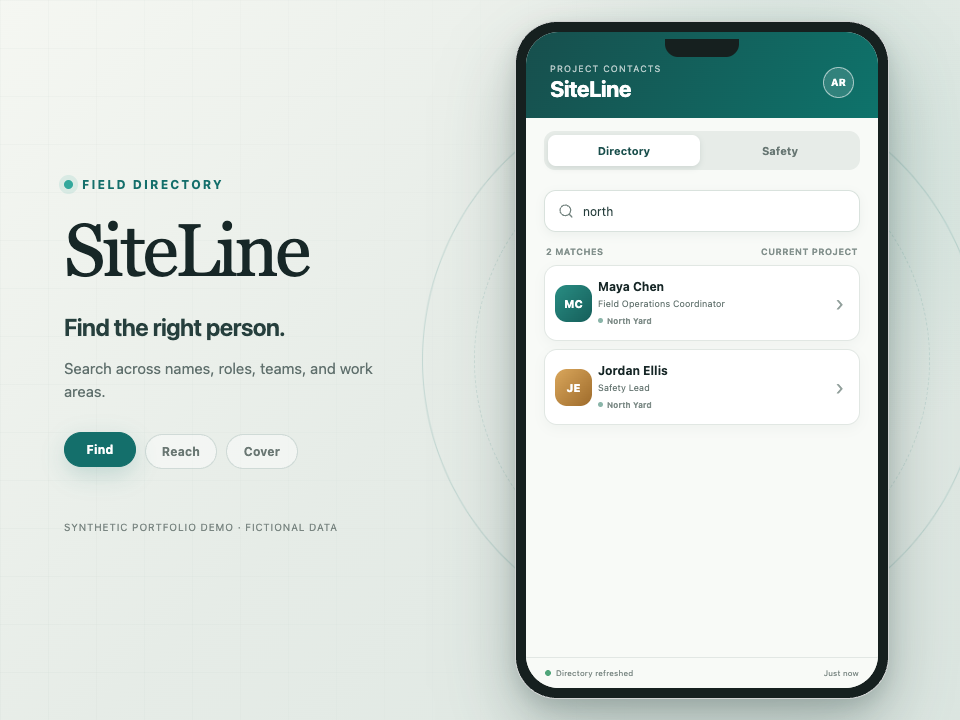
Search shaped around how people remember
Field users rarely begin with a perfect directory record. They may remember a first name and a work area, a trade and a building, or only that someone covers a particular safety function. SiteLine splits a query into terms and matches them across the fields people actually recall instead of forcing them through a rigid filter sequence.
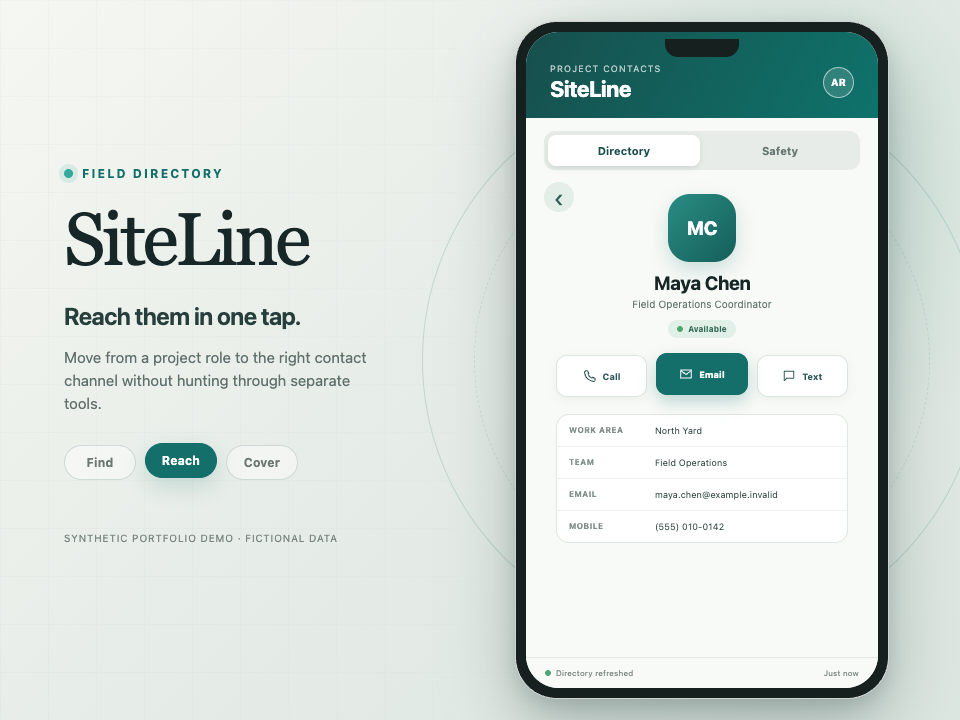
Results open into a responsive contact profile with direct call, email, text, and copy actions. The layout is designed for quick use on a phone, with the most actionable information ahead of lower-priority record detail.
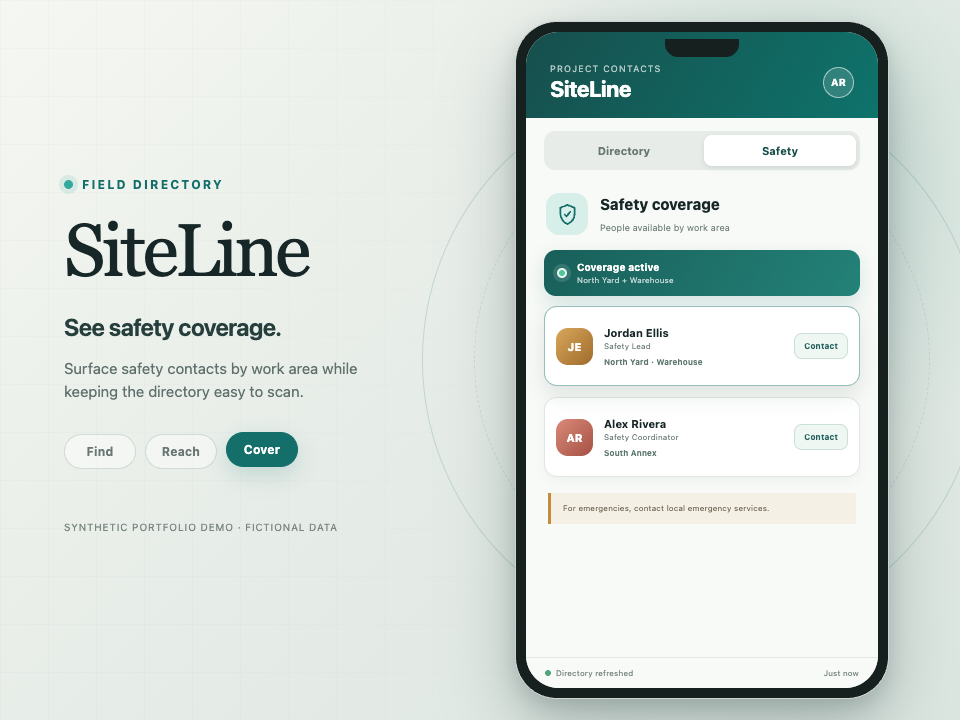
A dedicated safety path
Safety contacts are not buried inside the general directory. A separate screen narrows the experience to safety personnel and coverage, making it easier to find the right resource under time pressure. Safety content is held to a tighter source standard than general project notes; unverified resources do not appear merely to make the screen look complete.
Controlled reconciliation across data sources
The data model separates an enterprise personnel baseline from project-maintained enrichment. Controlled imports update authoritative employee fields while preserving supported external contacts, project roles, preferred values, and field context that the enterprise source does not own.
The design keeps provenance and fallback rules explicit. Microsoft 365 profile data can enrich a contact experience, but it does not silently overwrite project-owned information. Historical work-area observations can help someone find a contact, but the interface does not imply that the person is currently there.
Scope driven by use
The current build supports the core search, contact-detail, communication, import, and safety workflows in field use. Additional feedback tools, resources, and refinements stay behind observed field need rather than expanding the backlog speculatively.
What this demonstrates
- End-to-end product ownership from idea and requirements through field use
- Mobile Power Apps interface design and implementation
- Microsoft Lists schema design and project-scoped data ownership
- Power Automate import and reconciliation workflows
- Multi-field, multiword search designed around imperfect user memory
- Direct communication actions and responsive contact profiles
- Privacy-aware handling of personnel, location, and safety information
These simplified feature graphics use fictional people and data. They demonstrate the product model without publishing employee directory records or internal contact details.